
Learning is not simply about listening to a teacher, reading a textbook, or memorizing information for an examination. Effective learning happens when students actively participate in the process. An active learner takes responsibility for understanding information, asking questions, practicing new skills, solving problems, and connecting new knowledge with real-life experiences.
In modern education, active learning has become an important approach because it encourages students to think independently rather than simply receive information. Whether you are a school student, college student, professional, or someone learning a new skill, becoming an active learner can make the learning process more meaningful and effective.
What Is an Active Learner?
An active learner is a person who participates directly in the learning process. Instead of passively receiving information, an active learner interacts with the subject, asks questions, practices concepts, discusses ideas, and looks for ways to apply knowledge.
For example, a passive learner might read a chapter and move on after finishing it. An active learner may read the same chapter, take notes, identify important concepts, ask questions, explain the topic in their own words, and complete practice exercises.
Active learning does not necessarily mean being constantly busy. It means being mentally engaged with what you are learning.
Characteristics of an Active Learner
Active learners often develop habits that help them understand and remember information more effectively.
1. Curiosity
Curiosity is one of the most important qualities of an active learner. Curious students want to know why something happens, how it works, and how different ideas are connected.
Instead of accepting information without thinking, they explore the subject more deeply.
2. Asking Questions
An active learner is comfortable asking questions. Questions can help identify unclear concepts and encourage deeper understanding.
Good questions may include:
- Why does this happen?
- How does this process work?
- What is the difference between these two ideas?
- Can this concept be applied in real life?
- What evidence supports this conclusion?
Asking questions can turn a simple lesson into an opportunity for deeper learning.
3. Taking Responsibility
Active learners understand that teachers, books, videos, and courses can provide information, but the learner must ultimately take responsibility for understanding it.
They create study schedules, review difficult topics, practice regularly, and look for additional resources when necessary.
4. Critical Thinking
Active learning requires students to examine information rather than automatically accept everything they hear.
Critical thinking involves comparing information, identifying evidence, recognizing assumptions, and reaching conclusions based on reasoning.
5. Participation
Participation can take many forms. Students may participate in classroom discussions, group projects, practical activities, presentations, experiments, or online learning communities.
Participation helps learners process information instead of simply hearing it.
6. Willingness to Make Mistakes
Mistakes are a natural part of learning. Active learners do not necessarily expect themselves to understand everything immediately.
Instead, they use mistakes as feedback. When an answer is incorrect, they try to understand why and use that information to improve.
Why Is Being an Active Learner Important?
Active learning can provide several advantages for students and lifelong learners.
Better Understanding
When learners actively interact with information, they have more opportunities to understand how concepts work.
For example, solving a mathematics problem requires a learner to use a concept rather than simply read about it.
Improved Memory
Active participation can make information more meaningful. Taking notes, explaining an idea, practicing questions, and connecting concepts can help learners remember what they studied.
Greater Confidence
Understanding a topic through practice can increase confidence. Instead of relying only on memorization, students develop the ability to use their knowledge.
Better Problem-Solving Skills
Active learners frequently encounter questions and problems that require them to apply what they know. This can strengthen problem-solving skills over time.
Greater Independence
Active learning encourages students to become more independent. They learn how to find information, evaluate resources, organize their studies, and identify areas that require additional attention.
Active Learner vs. Passive Learner
The difference between active and passive learning is mainly the level of engagement.
A passive learner may primarily listen, read, or watch while receiving information. An active learner interacts with that information.
For example:
| Passive Approach | Active Approach |
|---|---|
| Reading a chapter | Reading and taking notes |
| Listening to a lecture | Asking questions during the lecture |
| Memorizing a definition | Explaining the definition in your own words |
| Watching a demonstration | Practicing the skill |
| Reading an answer | Trying to solve the problem first |
| Studying alone without review | Testing yourself regularly |
Passive activities are not always ineffective. Reading, listening, and watching can all be useful. The important point is to combine them with activities that require thinking and application.
How to Become an Active Learner
Becoming an active learner does not require completely changing your study routine. Small changes can make learning more interactive.
Set Clear Learning Goals
Before beginning a study session, decide what you want to accomplish.
Instead of saying, “I will study science,” create a specific goal such as, “I will understand the three stages of this biological process and answer ten practice questions.”
Specific goals make it easier to measure progress.
Take Useful Notes
Effective note-taking is more than copying everything a teacher says.
Try to summarize important ideas in your own words. Use headings, diagrams, examples, questions, and short explanations.
After studying a topic, review your notes and identify anything you still do not understand.
Ask Questions
Write down questions while studying. If you do not understand something, research it or ask a teacher, classmate, mentor, or instructor.
Even simple questions can reveal important gaps in understanding.
Explain What You Learn
One powerful active-learning technique is to explain a concept as if you were teaching someone else.
You can explain it to a friend, family member, classmate, or even yourself.
If you cannot explain an idea clearly, that may indicate that you need to study the topic again.
Practice Regularly
Practice transforms theoretical knowledge into usable knowledge.
For academic subjects, practice may include solving problems, completing quizzes, writing answers, or working through examples.
For practical skills, practice could involve coding, drawing, speaking a language, conducting experiments, playing an instrument, or performing a professional task.
Use Self-Testing
Instead of repeatedly reading the same material, close your textbook and try to recall the important points.
Ask yourself:
- What did I just learn?
- What are the key terms?
- Can I explain this without looking at my notes?
- Can I solve a related problem?
- What part of the topic remains unclear?
Self-testing can show you what you actually know.
Connect New Information With Existing Knowledge
Learning becomes easier when new information is connected to something you already understand.
For example, when learning a new scientific concept, think about how it relates to an earlier lesson or something you have observed in everyday life.
Making connections helps create a larger understanding of a subject.
Active Learning in the Classroom
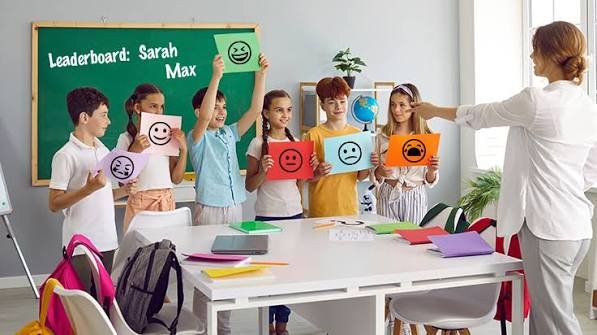
Teachers can encourage active learners by creating opportunities for participation.
Classroom activities may include:
- Group discussions
- Problem-solving exercises
- Debates
- Experiments
- Presentations
- Case studies
- Quizzes
- Peer teaching
- Projects
- Practical demonstrations
Students can become active learners by participating in these activities rather than waiting for the teacher to provide every answer.
A classroom does not have to be completely discussion-based for active learning to occur. Even a short question-and-answer session or practice exercise can encourage students to think more deeply.
Active Learning Online
Online education provides many opportunities for active learning.
Students can pause instructional videos, take notes, complete interactive quizzes, participate in discussion forums, practice skills, and create projects based on what they have learned.
However, online learning can also make passive learning easy. Watching hours of videos without practicing or reviewing the material may not produce strong understanding.
An active online learner creates a routine that includes watching, reading, practicing, reviewing, and applying information.
Role of Technology in Active Learning
Technology can support active learning when it is used intentionally.
Educational apps, digital flashcards, online quizzes, simulations, learning platforms, and collaborative documents can provide opportunities to practice and receive feedback.
However, technology itself does not automatically create active learning. The learner still needs to interact with the material and think critically.
For example, simply watching an educational video is generally more passive than watching the video while taking notes, answering questions, and completing a related activity.
Benefits of Active Learning for Different Age Groups
Active learning is useful at many stages of life.
School Students
School students can use active learning to understand academic subjects, prepare for examinations, and develop independent study habits.
College Students
College students often need to manage larger amounts of information. Active learning can help them organize complex subjects and apply theoretical knowledge.
Professionals
Employees can use active learning when developing new technical, communication, management, or professional skills.
Lifelong Learners
People learning for personal interest can use active learning to explore subjects such as history, languages, technology, cooking, art, or science.
Common Challenges for Active Learners
Although active learning has many benefits, learners may face challenges.
One common problem is lack of consistency. A student may actively study for several days and then return to passive habits.
Another challenge is fear of making mistakes. Some learners avoid asking questions because they worry about giving an incorrect answer.
Time management can also be difficult. Active learning activities often require more effort than simply reading or watching content.
The solution is not to make every study session complicated. Instead, introduce small active-learning habits and gradually build them into your routine.
Simple Active Learning Routine
A basic study session could follow this structure:
Step 1: Preview
Look at the topic and identify the main concepts.
Step 2: Learn
Read the material, attend the lesson, or watch the instructional content.
Step 3: Engage
Take notes, ask questions, and identify important ideas.
Step 4: Practice
Solve problems, answer questions, or perform the relevant skill.
Step 5: Explain
Describe the topic in your own words.
Step 6: Review
Test yourself without looking at your notes.
Step 7: Reflect
Identify what you understand and what needs more practice.
This simple process can turn an ordinary study session into a more active learning experience.
Final Thoughts
An active learner does more than receive information. They participate, question, practice, reflect, and apply what they learn. Active learning can help develop understanding, confidence, problem-solving ability, and independent learning skills.
The most important step is to start small. Ask one additional question, summarize one lesson in your own words, complete a few practice problems, or explain a new concept to someone else. Over time, these habits can transform the way you approach education.
Active learning is not about studying harder all the time. It is about becoming more involved in the learning process and taking an active role in your own progress.
Frequently Asked Questions About Active Learner
1. What is an active learner?
An active learner is someone who participates directly in the learning process by asking questions, practicing concepts, solving problems, discussing ideas, and applying new knowledge.
2. What are the characteristics of an active learner?
Common characteristics include curiosity, participation, critical thinking, questioning, independence, regular practice, reflection, and willingness to learn from mistakes.
3. What is the difference between active and passive learning?
Active learning requires the learner to interact with and process information, while passive learning generally involves receiving information through activities such as reading, listening, or watching without much interaction.
4. How can I become an active learner?
You can become an active learner by setting clear goals, taking notes, asking questions, practicing regularly, using self-testing, explaining concepts in your own words, and applying what you learn.
5. Is active learning useful for online education?
Yes. Online learners can use quizzes, practice exercises, discussion forums, projects, note-taking, and self-testing to make their learning more active.
6. Does active learning help students remember information?
Active learning can support understanding and recall because learners interact with information through activities such as practice, explanation, questioning, and self-testing.
7. Why is asking questions important for active learners?
Questions help learners identify gaps in their understanding and encourage them to explore concepts more deeply.
8. Can adults become active learners?
Yes. Active learning can be used by adults for professional development, personal interests, higher education, and learning new skills.
9. Are mistakes important for active learning?
Mistakes can provide useful feedback. Reviewing an incorrect answer and understanding the reason for the mistake can help improve future performance.
10. What is the best way to start active learning?
Start with one or two simple habits, such as writing questions while studying and testing yourself after completing a lesson. You can gradually add more active-learning techniques as they become part of your routine.

One thought on “Active Learner: Meaning, Benefits, Characteristics, and How to Become One”